
The 5 repairs you should never let a vessel sail with in the Gulf of Guinea
Some defects can be monitored to next port. These five cannot. If they appear on your list at Douala, close them before sailing.
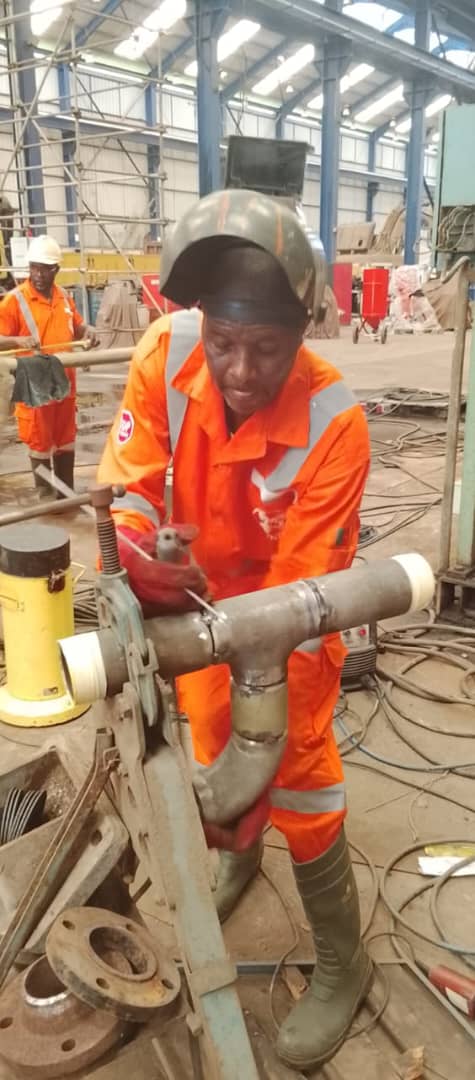
Most defects on a vessel's list can be scheduled. A handful cannot — and the Gulf of Guinea, with its distance from major yards, its weather windows and its security overlay, sharpens the list further. If any of the following are on your list when you arrive at Douala, close them alongside.
1. Cracked or degraded sea water piping in the engine room
A sea water line failure at sea is a flooding risk that puts the vessel at emergency response speed. If the cracked section is visible or NDT-confirmed, do not sail. Insert a new section, pressure test, class-attend if applicable.
2. Steering gear hydraulics — any leak
A steering system with a visible external leak is a defect that can escalate to loss of control. Any weep from a hydraulic cylinder, hose or fitting is a hard stop. This is not the coast to test how far you can push a marginal steering system.
3. Emergency fire pump not delivering rated pressure
SOLAS non-compliance and a real risk in a machinery-space fire. If the pump will not lift to spec, close the fault before sailing. Usually a suction filter, a worn impeller, or a check valve. All fixable alongside inside a shift.
4. Life-saving appliances with expired or damaged inflatables
Lifejackets, immersion suits, EEBDs, life rafts overdue on service. These are the items PSC hits hardest in this region, and being detained for a lifejacket is an insult. Get the servicing done at berth, get the paperwork on file.
5. Structural cracks in the way of a load-bearing member
A visible crack in a longitudinal, a bulkhead stiffener, or a hatch coaming that is under load is not a "monitor and revisit". Have it assessed by class and either cropped and renewed or credible-monitored with a documented plan before departure.
The common thread
Every item on this list has a low cost to close alongside and a very high cost to fail at sea. If it is on the list at Douala, treat it as a hard stop. We will attend inside the hour with the trades and consumables to close it.